

Bringing a new cat into your home can be exciting—but if you already have a cat, there’s an important step between bringing them home and becoming best friends.
Cats are territorial by nature, and a new cat can feel like a major disruption to their familiar environment. The good news? A slow, thoughtful introduction can make a huge difference.
Here are 10 tips for helping two cats get comfortable with each other.

Phoebe and Monica say:
1. Give the New Cat Its Own Space
Don’t start with a face-to-face meeting. Set up a separate room for your new cat with food, water, a litter box, bedding, toys, and a place to hide.
This gives your new cat time to decompress while allowing your resident cat to adjust to the new smells and sounds.
2. Let Them Get Used to Each Other’s Scents
Before they meet, let the cats learn about each other through scent. Swap blankets, bedding, or toys between the two spaces.
You can also gently rub a clean cloth on one cat’s cheeks and place it near the other cat’s food area. Scent is a huge part of how cats understand their environment.
3. Feed Them Near Opposite Sides of the Door
Once both cats seem comfortable, begin feeding them on opposite sides of the closed door.
The goal is to help each cat associate the smell and presence of the other cat with something positive—food!
If either cat seems stressed, simply move the bowls farther from the door and try again later.

Teddy says:
4. Let Them Explore Each Other’s Spaces
When both cats are comfortable, allow them to take turns exploring the other’s area while keeping them separated.
This gives them another opportunity to investigate each other’s scent without the pressure of a face-to-face encounter.
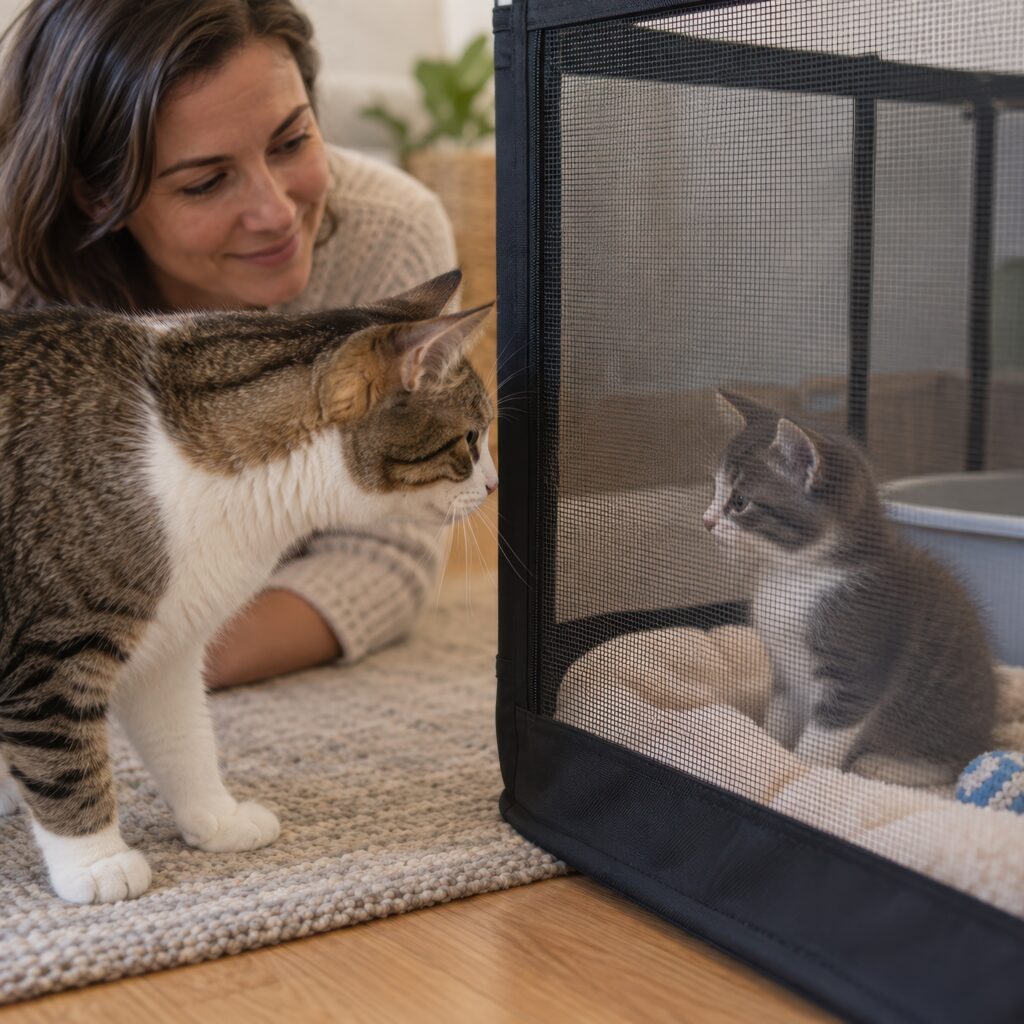
5. Try a Visual Introduction
Next, allow the cats to see each other through a baby gate, screen, cracked door, or other safe barrier.
Keep these first visual encounters short and positive. A little curiosity is great. Hissing, growling, or obvious stress means it’s time to take a step back.
6. Keep the First Meetings Short
When you’re ready for a face-to-face introduction, keep it brief.
Let them observe and investigate each other without forcing interaction. You can use treats, toys, or gentle play to create a positive experience.
And remember: they don’t have to become friends immediately.
Our Pet Professionals Add:
7. Give Each Cat Its Own Resources
Competition can create tension, so make sure each cat has access to its own essentials.
That means multiple food and water stations, beds, scratching posts, hiding places, and toys.
And don’t forget the litter boxes! A commonly recommended guideline is one litter box per cat, plus one extra.
8. Provide Plenty of Vertical Space
Cats often feel safer when they have a way to get up and observe their surroundings.
Cat trees, shelves, window perches, and other elevated spaces give cats options for retreating when they need some personal space.
9. Don’t Punish Hissing or Growling
Hissing doesn’t necessarily mean the cats will never get along. It’s communication—and often a cat’s way of saying, “I need some space.”
Instead of punishing the behavior, calmly separate the cats and give them more time.
10. Be Patient
This might be the biggest tip of all.
Some cats become buddies within days. Others need weeks or even months to become comfortable sharing their home. And sometimes, success simply means two cats peacefully coexisting rather than curling up together for an afternoon nap.
Let the cats set the pace, and celebrate the small victories along the way.
Ready to Add Another Cat to the Family?
A little preparation can go a long way toward making the transition easier for everyone. If you’re adding a new cat to your household—or just have questions about caring for your feline friends—J&M Aquatics & Pet Center is here to help.